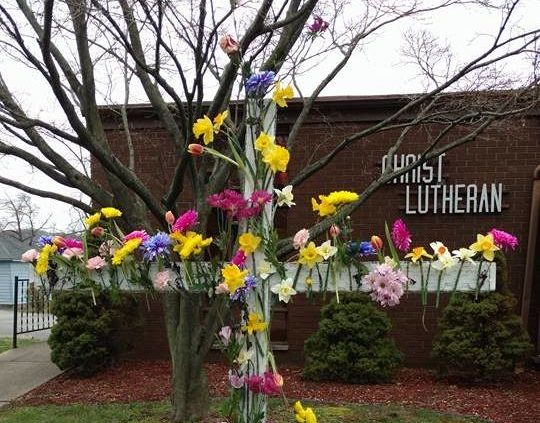
Christ Lutheran Church
キリストルーテル教徒教会

http://www.christlutheranviennawv.org/

Church 教会

A church building is a building or structure whose primary purpose is to facilitate the meeting of a church. Originally, Christians met in synagogues and in one another's homes. As Christianity grew and became more accepted by governments, rooms, and eventually entire buildings, were set aside for the explicit purpose of Christian worship. Traditional church buildings are often in the shape of a cross, and frequently have a tower or dome. More modern church buildings have a variety of architectural styles and layouts; many buildings that were designed for other purposes have now been converted for church use, and similarly many original church buildings have been put to other uses. The first Christians were, like Jesus, Jews resident in Israel who worshiped on occasion in the Temple in Jerusalem and weekly in local synagogues. Temple worship was a ritual involving sacrifice, occasionally including the sacrifice of animals in atonement for sin, offered to Yahweh until Jesus became the final sacrificial offering on Calvary. The New Testament includes many references to Jesus visiting the Temple, the first time as an infant with his parents. The early history of the synagogue is obscure, but it seems to be an institution developed for public Jewish worship during the Babylonian captivity when the Jews did not have access to the Jerusalem Temple for ritual sacrifice. Instead, they developed a daily and weekly service of readings from the Torah or the prophets followed by commentary. This could be carried out in a house if the attendance was small enough, and in many towns of the Diaspora that was the case. In others, more elaborate architectural settings developed, sometimes by converting a house and sometimes by converting a previously public building. The minimum requirements seem to have been a meeting room with adequate seating, a case for the Torah scrolls, and a raised platform for the reader and preacher. Jesus himself participated in this sort of service as a reader and commentator (see Gospel of Luke 4: 16-24) and his followers probably remained worshipers in synagogues in some cities. However, following the destruction of the Temple in Jerusalem in 70, the new Christian movement and Judaism increasingly parted ways. The Church became overwhelmingly Gentile sometime in the 4th century. The Syrian city of Dura-Europos on the West bank of the Euphrates was an outpost town between the Roman and Parthian empires. During a siege by Parthian troops in A.D. 257 the buildings in the outermost blocks of the city grid were partially destroyed and filled with rubble to reinforce the city wall. Thus were preserved and securely dated the earliest decorated church and a synagogue decorated with extensive wall paintings. Both had been converted from earlier private buildings. The church at Dura Europos has a special room dedicated for baptisms with a large baptismal font.

教会建設は、主な目的が教会の会議を促進することになっている建物または構造です。当初、シナゴーグで、そして、お互いで会われるクリスティアンスは、家です。キリスト教が成長して、政府によってより認められたので、部屋と結局全ての建物はキリスト教の崇拝の露骨な目的のためにとっておかれました。伝統的な教会の建物にはしばしば十字の形で、しばしば塔またはドームがあります。より現代的な教会ビルディングは、いろいろな構造上のスタイルとレイアウトを持ちます;他の目的のために設計された多くの建物は今は教会の使用のために変わりました、そして、同じように多くの最初の教会ビルディングは他に使用されました。初のキリスト教徒は、イエスのように、エルサレムのテンプルで、そして、毎週地元のシナゴーグでときどき崇拝したイスラエルのユダヤ人居住者でした。寺院崇拝は犠牲が関係している儀式でした。そして、時折動物の犠牲を罪に対する償いに含みました。そして、イエスがカルヴァリの上の最終的な犠牲の提供品になるまで、ヤハウェに提供されました。新約聖書は、テンプル(彼の両親と一緒の幼児としての最初)を訪ねているイエスへの多くの言及を含みます。シナゴーグの初期の歴史ははっきりしないです、しかし、機関であることがユダヤ人が儀式犠牲のためにエルサレムテンプルにアクセスしなかったバビロニアの監禁の間、一般のユダヤ人の崇拝のために発達したようです。その代わりに、彼らは読本の毎日で毎週のサービスを解説が続く律法または予言者から発達させました。出席者数が十分に、そして、本当だったディアスポラの多くの町で少ないならば、これは家で実行されることができます。他において、時々家を改造することによって、そして、時々前に公共建物を改造することによって、より精巧な構造上のセッティングは発達しました。最小限の必要条件は、十分な座席による会議室、律法巻物のためのケースと読者と伝道者のための高くしたプラットホームであったようです。イエスは読者と解説者として彼自身この種類のサービスに参加しました(ルーク4の福音書を見てください:16-24)そして、彼の支持者は、多分若干の都市のシナゴーグの崇拝者のままだったでしょう。しかし、70のエルサレムのテンプルの破壊の後で、新しいキリスト教の運動とユダヤ教は、ますます方法を分けました。教会は、4世紀のあたり、圧倒的にジェンティーレになりました。ユーフラテス川の西岸の上のDura-Europosのシリアの都市は、ローマのおよびパルティア人帝国の間の最先端町でした。A.D.のパルティア人部隊による包囲の間、市格子の最も外部のブロックの建物が破壊されて、都市壁を補強するために粗石でいっぱいで部分的にあった257。このように、保存されて、安全に、広範囲な壁画で飾られる最も早く装飾された教会とシナゴーグの年代を示しました。両方とも、初期の私立の建物から変わりました。Dura Europosの教会は、特別室を大きな洗礼のフォントで洗礼のために開いておきます。

・肌のハリを取り戻すならライスフォースがいいって。有名になったね、ライスフォース。・キューサイ はちみつ青汁 飲みやすい青汁、青汁といえばキューサイ
薬用クリアエステベール 美白しながらファンデ!新発想の美容液ファンデが大人気

God 神

God is the principal or sole deity in religions and other belief systems that worship one deity. The singular, capitalized God of monotheistic religions is commonly contrasted with the gods of polytheistic religions. God is most often conceived of as the supernatural creator and overseer of the universe. Theologians have ascribed a variety of attributes to the many different conceptions of God. The most common among these include omniscience, omnipotence, omnipresence, omnibenevolence (perfect goodness), divine simplicity, jealousy, and eternal and necessary existence. God has also been conceived as being incorporeal, a personal being, the source of all moral obligation, and the "greatest conceivable existent". These attributes were all supported to varying degrees by the early Jewish, Christian and Muslim theologian philosophers, including Maimonides, Augustine of Hippo, and Al-Ghazali, respectively. Many notable medieval philosophers developed arguments for the existence of God,attempting to wrestle with the apparent contradictions implied by many of these attributes. The earliest written form of the Germanic word god comes from the 6th century Christian Codex Argenteus. The English word itself is derived from the Proto-Germanic * ?u?an. Most linguists agree that the reconstructed Proto-Indo-European form * ?hu-to-m was based on the root * ?hau(?)-, which meant either "to call" or "to invoke". The capitalized form God was first used in Wulfila's Gothic translation of the New Testament, to represent the Greek Theos. In the English language, the capitalization continues to represent a distinction between monotheistic "God" and "gods" in polytheism. In spite of significant differences between religions such as Christianity, Islam, Hinduism, the Baha'i Faith, and Judaism, the term "God" remains an English translation common to all. The name may signify any related or similar monotheistic deities, such as the early monotheism of Akhenaten and Zoroastrianism. Conceptions of God can vary widely, but the word God in English?and its counterparts in other languages, such as Latinate Deus, Greek Te??, Slavic Bog, Sanskrit Ishvara, or Arabic Allah?are normally used for any and all conceptions. The same holds for Hebrew El, but in Judaism, God is also given a proper name, the tetragrammaton (usually reconstructed as Yahweh), believed to hark back to the religion's henotheistic origins. In the Bible, when the word "Lord" is in all capitals, it signifies that the word represents the tetragrammaton. God may also be given a proper name in monotheistic currents of Hinduism which emphasize the personal nature of God, with early references to his name as Krishna-Vasudeva in Bhagavata or later Vishnu and Hari, or recently Shakti. It is difficult to draw a line between proper names and epitheta of God, such as the names and titles of Jesus in the New Testament, the names of God in the Qur'an, and the various lists of thousand names of God and List of titles and names of Krishna in Vaishnavism. Conceptions of God vary widely. Theologians and philosophers have studied countless conceptions of God since the dawn of civilization. The Abrahamic conceptions of God include the trinitarian view of Christians, the Kabbalistic definition of Jewish mysticism, and the Islamic concept of God. The dharmic religions differ in their view of the divine: views of God in Hinduism vary by region, sect, and caste, ranging from monotheistic to polytheistic; the view of God in Buddhism is almost non-theist. In modern times, some more abstract concepts have been developed, such as process theology and open theism. Conceptions of God held by individual believers vary so widely that there is no clear consensus on the nature of God. The contemporaneous French philosopher Michel Henry has however proposed a phenomenological approach and definition of God as phenomenological essence of Life.

神は、1匹の神に礼拝する宗教と他の信念システムの校長または唯一の神です。一神教信者の宗教の他に類のない、資本化された神は、多神教の宗教の神と、一般に対比されます。神は、宇宙の超自然的な創設者と監督と最もしばしば考えられます。神学者は、いろいろな特質を神の多くの異なる概念のためとしました。これらの間で最も一般のものは、全知、全能、遍在、omnibenevolence(完全な長所)、神の単純さ、嫉妬と永遠で必要な存在を含みます。神も、無形にしながら考えられました、個人の存在(すべての道徳的責任のもと)と「最も大きな考えられる存在するもの」。これらの特質のすべては、それぞれ、マイモニデス、HippoのアウグスチヌスとアルGhazaliを含む初期のユダヤ人で、キリスト教で、イスラム神学者哲学者によって程度を変えることに支えられました。多くの著名な中世の哲学者は、これらの特質の多くによってほのめかされる見た目の矛盾と闘うために、God,attemptingの存在のための論拠を進展させました。ゲルマン語派知らせ神で最も初期の書面にした書式は、6世紀のキリスト教Codex Argenteusから来ます。英単語そのものは、Proto-ゲルマン語派*に由来します?u?大部分の言語学者は再建されたProto-インド‐ヨーロッパ語族が*をつくることに同意します?hu-雄猫は根*に基づきました?hau(?)−「訪問するために」どちらでも意味しました、あるいは、「実施します」。資本化された形神が新約聖書のWulfilaのゴシック翻訳で最初に使われました。そして、ギリシアのTheosを代表しました。英語では、資本化は多神教で一神教信者の「神」と「神」の区別を意味し続けます。宗教(例えばキリスト教、イスラム教、ヒンズー教、バハーイ教Faithとユダヤ教)間の有意差にもかかわらず、語「神」は、すべてに共通の英語の翻訳のままです。名前は、どんな関連したか類似した一神教信者の神(例えばAkhenatenとゾロアスター教の初期の一神教)でも意味するかもしれません。英語の語神以外の、神の概念は、広く変化することができます?そして、他の言語(例えばラテン語のDEU、ギリシアのTe)のその対応する物??スラブのBog、サンスクリット語のイーシュヴァラまたはアラビアアラー?何でもとすべての概念のために通常使われます。同じことはヘブライ語Elのために保ちます、しかし、ユダヤ教において、神は固有名詞(ヤハウェの4子音文字(通常、ヤハウェとして再建される))も与えられます。そして、宗教のhenotheisticな起源に立ち戻ると思われています。聖書では、語「支配者」がすべての首都にいるとき、それは語がヤハウェの4子音文字を意味することを示します。Bhagavataまたは後のヴィシヌとハリのクリシュナ-Vasudevaとしての彼の名前への早めの言及または最近シャクティと、神は神の個人の性質を強調するヒンズー教の一神教信者の流れで、固有名詞も与えられるかもしれません。神(例えば名前と新約聖書のイエス、コーランの神の名前とタイトルの神とListの千名とVaishnavismのクリシュナの名前のいろいろなリストのタイトル)の固有名詞とepithetaの間で線を描くことは、難しいです。神の概念は、広く変化します。神学者と哲学者は、文明の夜明けから、神の無数の概念を研究しました。神のAbrahamic概念は、キリスト教徒のtrinitarianの見方、ユダヤ人の神秘主義のKabbalistic定義と神のイスラム概念を含みます。dharmicな宗教は、神学者の彼らの見方において異なります:ヒンズー教の神の見方は地域、セクトとカースト制度によって変化します。そして、変動することが多神教のものに一神教信者です;仏教の神の見方は、ほとんど非有神論者です。現代には、もう少し抽象的な概念は発展して、例えば神学を処理して、有神論を開けます。個々の信者によって持たれる神の概念は、神の性質についてのはっきりしたコンセンサスがないほど広く変化します。同時性のフランスの哲学者ミシェルアンリは、しかしライフの現象学的なエキスとして、現象学的なアプローチと神の定義を提案しました。

from wikipedia